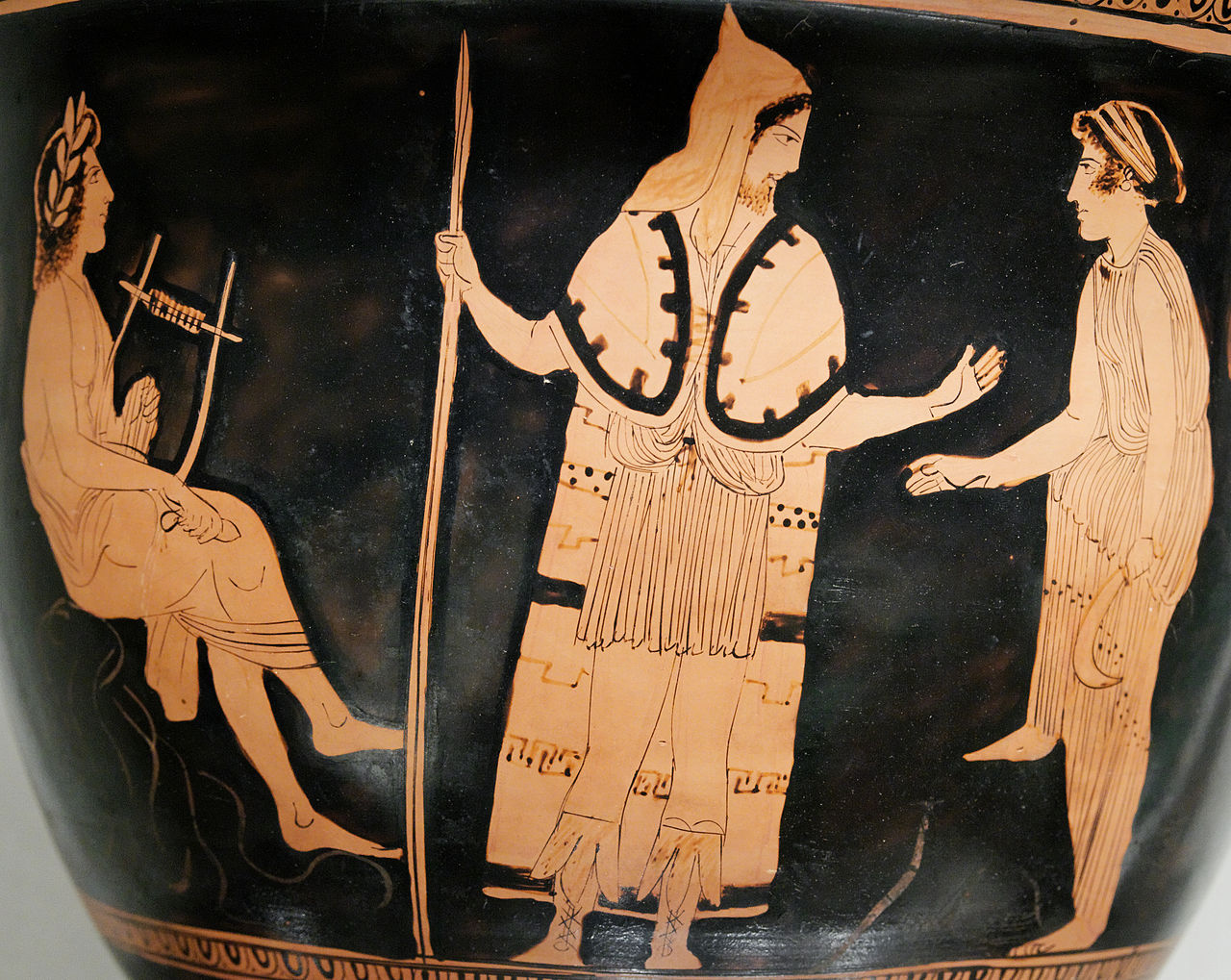
Orpheus / Orpheus
Greatest musician of myth, who journeyed to the Underworld
Orpheus was the greatest musician who ever lived, a singer whose music could charm wild beasts, move stones and trees, and even soften the hearts of the gods of the dead. His love for Eurydice took him alive into the Underworld — and a single impatient glance lost her forever.

How they were born
Orpheus was born in Thrace, the son of the god Apollo and the Muse Calliope — or, in some versions, of Oeagrus, king of Thrace, with Apollo as his divine teacher. Apollo gave him a lyre, and the Muses taught him to play it so beautifully that no one who heard him could resist. When he sang, the birds fell silent to listen, the trees bent toward him, the rivers changed course, and the wild beasts lay down peacefully at his feet. He grew up to be the most famous singer in Greece, and when Jason gathered the Argonauts for the quest of the Golden Fleece, Orpheus was one of the first heroes he called.
The greatest stories
The Music That Charmed the World
Orpheus' music was not entertainment — it was power. When he played his lyre, savage beasts came out of the forests and lay down tamely before him, birds circled above his head, and even the trees and rocks were said to move closer to hear him sing. He sailed with Jason and the Argonauts, and his music saved the whole crew twice: when the Argo passed the Sirens, whose song lured sailors to their deaths on the rocks, Orpheus played his lyre louder than their singing until the danger was past; and when the Argonauts quarreled, his music calmed their anger. The Greeks believed his songs could charm anything living — and, as he would discover, even the dead.
The Wedding and the Snakebite
Orpheus fell in love with Eurydice, a wood nymph of Thrace, and the two were married in a joyful ceremony attended by the gods themselves. But on their wedding day, as Eurydice danced with her companions through the meadows, she stepped on a venomous snake hidden in the grass. The bite killed her almost at once, and she was carried down to the Underworld before the wedding feast was over. Orpheus was broken with grief. He played his lyre day and night, singing songs so sad that the whole world seemed to weep with him — but no song could bring her back. So he made a decision no living man had ever dared: he would go down to the land of the dead himself, and ask for her back.
The Descent to the Underworld
Orpheus descended through the dark cave of Taenarum into Hades, playing his lyre as he went. The three-headed hound Cerberus, who guards the gates of the dead, lay down and let him pass. The ferryman Charon carried him across the river Styx, and the tormented souls of the Underworld paused in their suffering to listen. At last he stood before Hades and Persephone, king and queen of the dead, and sang them the song of his lost love. Even the pitiless gods of the dead were moved: Hades agreed to let Eurydice return to the living world, on one condition — Orpheus must walk ahead of her all the way to the surface, and he must not look back at her until they were both in the sunlight. Orpheus agreed, and began the long climb, Eurydice following silently behind him.
The Look Back and the Death of Orpheus
The climb was long and dark, and Orpheus could hear nothing behind him — no footsteps, no breathing — because the dead make no sound. Just as he reached the sunlight, doubt seized him: what if the gods had tricked him, and no one was following at all? He turned around. Eurydice was there, just one step behind him, still in the shadows — and as he looked at her, she slipped back into the darkness, reaching out her arms to him as she faded. He had lost her a second time, and this time forever. Heartbroken, Orpheus wandered Thrace singing only sad songs, refusing the love of all women. At last a band of Maenads, wild followers of Dionysus, fell on him in a frenzy and tore him to pieces. But his head, thrown into the river Hebrus, went on singing as it floated downstream, and washed up on the island of Lesbos, which became famous for music and poetry ever after.
Family & connections
Symbol, animal & weapon
Fun facts
- Orpheus' head kept singing after his death: thrown into the river Hebrus, it floated all the way to the island of Lesbos, still singing, and Lesbos became the home of the great lyric poets Sappho and Alcaeus.
- His lyre was placed among the stars as the constellation Lyra, and its brightest star, Vega, was one of the first stars ever photographed.
- A whole religious movement, Orphism, was named after him: its followers believed the soul was immortal and could be purified through Orpheus' teachings and rituals.
- Orpheus saved the Argonauts from the Sirens by playing his lyre louder than their deadly song — the only ship ever to sail past the Sirens unharmed, besides Odysseus' ship.
- The story of Orpheus and Eurydice has been retold in operas more than any other Greek myth — including Monteverdi's L'Orfeo of 1607, one of the first operas ever written, and Gluck's Orfeo ed Euridice.
Gallery — sculpture & art